
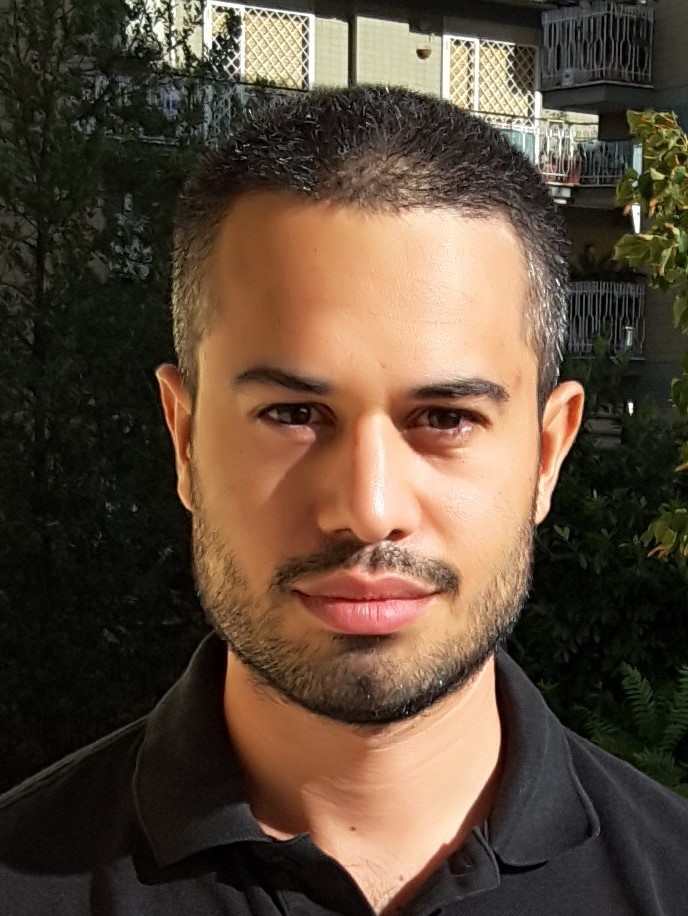
 Andrea Nicolò
KEYNOTE LECTURE
Breathing Monitoring in Sports and Exercise: Importance and Applications
Andrea Nicolò
University of Rome "Foro Italico", Italy
ABSTRACT
Breathing monitoring is an overlooked yet highly informative approach for understanding exercise responses in real-world sport settings. While the respiratory system has long been viewed as non-limiting for endurance performance, growing evidence suggests that ventilatory variables provide valuable insights into how athletes perceive, tolerate, and respond to exercise. Recent advances in our understanding of ventilatory control further strengthen this perspective, indicating that respiratory frequency and tidal volume are modulated by different physiological mechanisms and therefore provide complementary insights into the demands of exercise. These developments, together with the rapid evolution of wearable technologies, are creating unprecedented opportunities to monitor breathing continuously during training and competition. This talk will discuss the physiological rationale for breathing monitoring, present practical applications in endurance and team sports, and highlight current challenges in translating breathing monitoring from the laboratory to the field. Advancing this area requires close integration of expertise in sport science, exercise physiology, respiratory physiology, bioengineering, and data analytics.
SPEAKER BIOGRAPHY
Andrea Nicolò is Associate Professor at the University of Rome “Foro Italico”, where he obtained his BSc (2009), MSc (2011), and PhD (2015) in Sports, Exercise and Ergonomics. His research lies at the intersection of sport science, exercise physiology, and wearable technologies, with a particular focus on respiratory monitoring, breathing control during exercise, endurance performance, and the development of novel methodologies and metrics for training load assessment and management. He has collaborated with leading national and international sports technology companies on projects aimed at developing innovative monitoring metrics and exercise-testing protocols, as well as validating wearable devices and related algorithms. He has authored more than 60 peer-reviewed scientific publications and has received national and international awards in recognition of his contributions to sport and exercise science.